
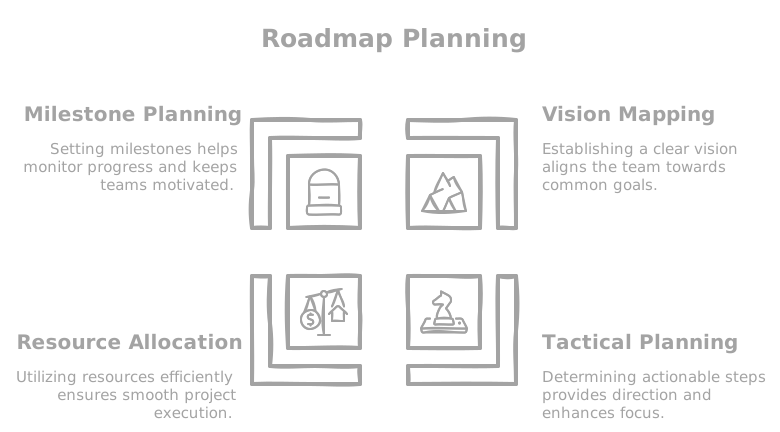
A roadmap isn’t a task list or a promise set in stone: it’s the translation of your vision into a path the team can actually walk. Done well, it aligns effort and clarifies priorities; done badly, it becomes a document no one opens. The challenge is to plan enough to have direction, without planning so much that you lose the ability to adapt when markets, customers, or technology shift overnight.
Imagine setting out on a journey without a map: disorienting, isn’t it? The same thing happens to a business without a clear roadmap, lost among competing priorities and opportunities that appear and vanish. A good plan doesn’t remove uncertainty, but it does give you a compass to decide with judgment when that uncertainty shows up. These are the components that hold a solid plan together:
- Vision: the destination and the reason behind it.
- Milestones: large, understandable goals that mark progress.
- Priorities: what comes first, based on impact.
- Review: adjusting course as the context changes.
From vision to milestones
Every useful roadmap starts with a clear question: where are we going, and why? Understanding roadmap planning is like assembling a puzzle: each piece has to fit into the full picture, and the full picture is the vision, not the sum of scattered tasks. Before thinking about dates, it helps to answer what you want to achieve in the short and long term, who the people involved are, what resources you need, and how you’ll measure success. If those questions have no answer, no to-do list will save the plan.
Milestones are how you bring that vision down to earth without committing yet to every detail of execution. They mark big moments of progress (the first customer, the version that ships to production, the integration that unlocks a market) and let the details get concrete as you approach them. Companies that master this discipline don’t just describe their next releases: they fold in user feedback and market reading to stay a step ahead while moving toward ambitious goals.
One detail that often gets overlooked is how far away each milestone sits in time. The closest ones can be defined with fair precision, because the context is still predictable; the distant ones are better left as higher-level intentions, knowing they’ll be sharpened when their moment arrives. Forcing false exactness on what will happen a year out tends to create more frustration than value, because the plan starts slipping in the very first quarter. The practical rule is simple: the further away the milestone, the broader the brushstroke should be.
For this first stage to work, a few points are worth protecting:
- Clarity above all. A well-documented roadmap answers fundamental questions before it lists activities, and writes down the reasoning behind each bet.
- Short and long-term goals. The vision points the way, but near-term milestones create traction and let you celebrate real progress.
- Cross-team alignment. When marketing, product, and development share the same destination, day-to-day decisions stop contradicting each other.
“Begin with the end in mind.” The line is Stephen R. Covey’s, and it captures the spirit of this stage: define the destination before taking the first step.
Prioritize what moves the needle most
There will never be enough time or resources for everything, so planning is, at heart, the art of saying no. Ranking initiatives by impact against the effort they require helps concentrate energy where it truly matters. A good roadmap is recognized as much by what it leaves out as by what it includes, because every rushed “yes” steals focus from what actually moves the business.
Prioritizing well takes method, not blind intuition. The difference between strategic and tactical planning helps order the exercise: strategy defines where you’re going, tactics detail how you get there. It’s the difference between dreaming about a vacation and actually booking the flights. Without the first, the team rows without direction; without the second, the vision stays as good intentions that never degenerate into concrete work.
A few criteria that help decide what comes first:
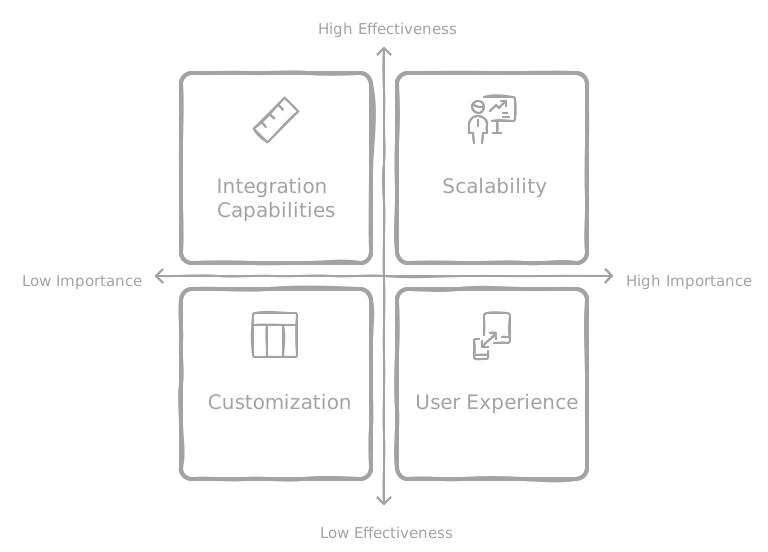
- Clear objectives. Articulating what you want to achieve, in measurable terms, directs every decision that follows.
- Impact versus effort. Weighing the expected value of each initiative against what it costs to build keeps you from chasing the flashy instead of the valuable.
- Success metrics. Defining what “done” looks like for each bet, whether a sales figure or a satisfaction indicator, keeps the team honest.
“Setting goals is the first step in turning the invisible into the visible.” The idea, attributed to Jim Rohn, is a reminder that prioritizing isn’t cutting for the sake of cutting, but focusing energy on what you want to make real.
A common trap when prioritizing is confusing the urgent with the important. The urgent shouts, fills the inbox, and pushes you to react; the important is rarely in a hurry, yet it’s what sets the medium-term direction. A healthy roadmap protects space for the important even when the urgent seems to swallow everything, because otherwise the team ends up putting out fires without ever moving toward the vision. Writing down what you decided not to do, and why, also keeps you from reliving the same debates every few weeks and gives context to whoever joins later.
Flexibility without losing direction
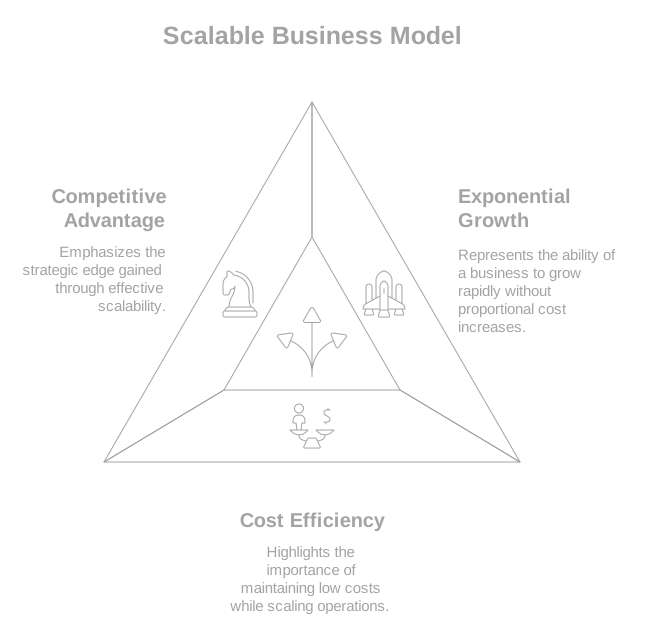
Markets, customers, and technology change, and a rigid roadmap ages badly. It’s best treated as a living document: firm on direction, flexible on the path, and reviewed with some regularity. The goal isn’t to predict the future, but to have a framework for deciding well when that future shifts. A ship on turbulent waters can’t simply hold its original course when the storm hits: it adjusts its sails and navigates through it.
That flexibility is built with concrete practices, not good intentions. Monitoring progress against the goals, opening feedback channels with the people who use the product, and experimenting before committing every resource are habits that turn a static plan into a system that learns. The ability to pivot quickly, more than the perfect plan, is what separates the companies that survive the unexpected from those stuck in a plan that no longer fits.
To stay on course without going rigid, it helps to build in:
- Continuous monitoring. Checking frequently where you stand against the goal lets you intervene in time when something drifts.
- Feedback loops. Listening to users and stakeholders at different stages feeds the adjustments that keep the roadmap relevant.
- Measured experimentation. Testing variants of an initiative before betting everything reduces risk and reveals what actually works.
“The greatest danger in times of turbulence is not the turbulence; it is to act with yesterday’s logic.” Peter Drucker said it, and it lands squarely on anyone clinging to a plan the context has already outgrown.
Keeping the team aligned
A roadmap only does its job if everyone understands and shares it. Communicating it clearly (the what, the why, and the priority) prevents disconnected work and misaligned expectations. When each person knows how their work contributes to the direction, day-to-day decisions become simpler and more consistent, because they stop depending on guessing the intent of whoever set the plan.
Alignment isn’t a one-time event but a conversation you sustain. Involving the right people early creates a sense of ownership; keeping them informed with regular updates preserves trust; and opening structured feedback mechanisms turns each member into someone who contributes, not just someone who executes. That’s where a dedicated development team and solid quality assurance make the difference between a milestone you announce and one you actually meet.
A few practices that sustain alignment over time:
- Early involvement. Bringing the right people in from the first stages integrates diverse perspectives and reduces surprises down the line.
- Regular updates. A fixed cadence of progress keeps everyone on the same page and prevents costly misunderstandings.
- Feedback mechanisms. Clear spaces for the team to share doubts and findings address problems in time and improve the plan.
“Alone we can do so little; together we can do so much.” Helen Keller’s line captures why a shared roadmap always outperforms one understood only halfway.
It’s worth remembering that organizations with systematic project management approaches are far more likely to meet their goals, according to the Project Management Institute. It isn’t magic: it’s what happens when direction, priorities, and execution all point the same way.
In short
A good roadmap balances direction and flexibility: a clear vision, prioritized milestones, and a team rowing the same way. It’s only as strong as the dedicated development team that executes it and the quality assurance that keeps every milestone reliable, and it stays alive only if you review it with the discipline of someone who knows the context will change. At LabWeb we plan product roadmaps with you and execute them in stages, adjusting course with each learning rather than staying locked to a plan that no longer fits.