In Mexico’s fast-moving tech landscape, which grows and professionalizes year after year, compliance is often treated as a last-minute formality. Many teams experience it as one more box to check, a dull process that can be left for the end. The reality is far more complex and far more decisive, both for local companies and for the international firms operating in this market. In software development, compliance is not paperwork: it is an architectural decision. A product that respects the law from the start costs much less than one patched after the fact, and it protects something that is hard to win back: the trust of your users and your business partners.
These are the key elements worth putting on the table before you write the first line of code:
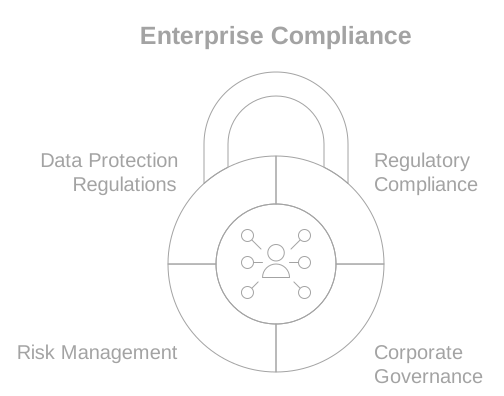
- Regulatory environment: software, personal data, and intellectual property.
- Cybersecurity obligations: no longer just good practice, but a necessity.
- Global standards alignment: frameworks like GDPR are not optional if you work with partners outside Mexico.
- Quality assurance: preventing costly errors and sustaining customer trust.
“In an age where technology evolves by the minute, overlooking compliance can lead to consequences that are anything but trivial.”
Navigating these waters takes more than awareness; it takes a proactive stance. Failing to follow established rules can end in financial penalties or, worse, in lost reputation. And reputation, in technology, is the asset that takes longest to build and evaporates fastest.
The legal framework for software developers
The legal framework for software development in Mexico is a layered structure that weaves together laws, regulations, and standards, and it ends up shaping how any technology company operates. Understanding it serves more than compliance: it lets you innovate with peace of mind and earn trust from clients and partners alike. It helps to look at it in parts rather than treat it as an impenetrable block.
When you break it down, the puzzle becomes manageable, and three pieces emerge that hold up almost everything else:
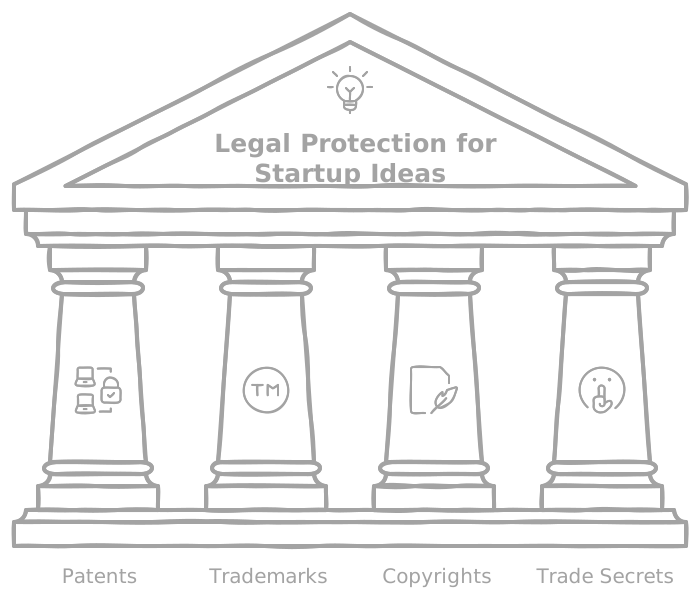
- Software licensing: intellectual property rules define how your creations are protected. You have to move carefully so that every product is legally sound and, at the same time, commercially viable. Ignoring this opens the door to lawsuits and heavy penalties.
- Personal data protection: the Federal Law on Protection of Personal Data Held by Private Parties sets strict guidelines on how personal data must be handled. Organizations must implement robust measures to safeguard user information effectively.
- Cybersecurity standards: meeting security obligations under Mexican law is essential. Teams are expected to adopt concrete safeguards against digital threats and to keep their systems resilient against intrusion attempts.
The interplay between these pieces forms a web of responsibilities you have to navigate with judgment. Non-compliance costs more than money: it leaves reputational damage that can close off business opportunities for years. That is why it is vital to follow closely how technology regulations evolve in the country, especially as the framework updates at the pace of technical advances.
In the end, embracing compliance is not about ticking boxes; it is about building a foundation of trust and sustainability. Being compliant does not just mean playing fair: it means preparing to compete over the long term in an increasingly demanding market. This is where custom software development gains an edge, because it builds these rules into the foundation of the product instead of treating them as a patch.
IT regulations and tech compliance standards
Understanding IT regulations and tech compliance standards in Mexico is a bit like decoding a puzzle. The terrain is governed by a set of rules designed not only to protect businesses but also to safeguard consumer interests. For developers, staying current is key: ignorance may be comfortable, but it will not protect you from a fine or a lawsuit.
The picture gets clearer once you separate the different families of obligations that coexist in the same ecosystem:
- IT regulations: these span a range of policies that govern how technology is developed and used, from privacy laws that regulate the handling of personal information to licensing requirements that protect intellectual property.
- Compliance standards: aligning with international frameworks is increasingly common. Standards such as ISO/IEC 27001, for information security management, are gaining ground and offer clear guidelines for handling sensitive data securely.
- Penalties for non-compliance: failing to comply can get expensive. Violations related to data protection and cybersecurity can lead to significant fines, on top of the indirect cost of lost trust.
The importance of understanding compliance in software development cannot be overstated. The very design of the legislation pushes for data protection to stop being an afterthought and become a central part of operations. Each year, more organizations discover, sometimes the hard way, that maintaining compliance is not optional but essential to staying in the game.
What is more, this landscape is not static: it demands constant monitoring and adaptation. As cloud computing gains ground, the rules evolve to address the new risks tied to data storage and access. Organizations that stay alert and proactive, adjusting their policies to current laws and emerging trends, are the ones that avoid surprises and keep their edge.
Data protection and privacy
As digital transformation accelerates across Mexico, data protection and privacy have become critical pillars of compliance in software development. The LFPDPPP sets strict requirements that organizations must follow to safeguard personal data. Ignoring these rules can carry serious consequences, from steep fines to reputational damage, a bit like running a yellow light only to get stuck later at a far more tangled intersection.
To grasp the scope of these laws, it helps to pause on their essential components, because each one defines a concrete obligation:
- Personal data categories: the law distinguishes between sensitive and non-sensitive information. Sensitive data calls for reinforced measures, such as the explicit consent of the person before any processing takes place.
- User consent: organizations must obtain informed consent before collecting or processing personal data. This means transparent privacy notices about how the information will be used and stored, a step that builds trust and loyalty.
- Breach notifications: in the event of a data breach, companies are obligated to notify affected individuals promptly. Timely communication can mitigate damage and preserve customer confidence.
The importance of respecting data protection in Mexico is hard to overstate. A very high share of consumers express concern about how companies handle their personal information, and that concern translates into purchasing decisions. Privacy, properly understood, stops being a legal requirement and becomes a selling point.
The government itself has shown interest in strengthening privacy frameworks through initiatives that aim to move closer to international standards like GDPR. The intent is twofold: to protect people’s rights and, at the same time, to strengthen Mexico’s position in the global digital economy. For a product team, this means that designing with privacy in mind does more than avoid penalties: it positions the company to grow sustainably while users feel secure sharing their information.
Cybersecurity: protecting your software assets
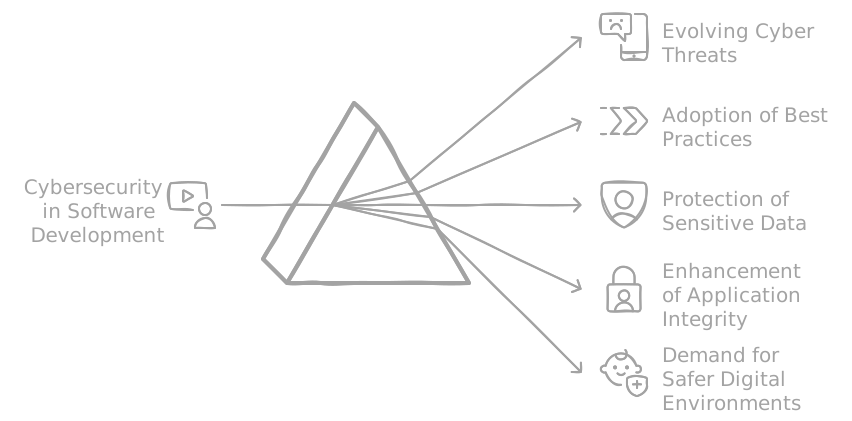
In the digital age, the importance of cybersecurity cannot be downplayed. As teams in Mexico keep innovating, they also have to reinforce their defenses against a growing range of threats. This need comes from two sources: legal obligations and the rising demand for trust from users. Neglecting security is like leaving your front door open with a welcome mat for intruders: it rarely ends well.
The difference between a resilient system and a fragile one usually comes down to a handful of practices applied consistently:
- Legal framework: cybersecurity compliance rests on official guidelines that companies must follow to protect their software assets and maintain solid security protocols.
- Risk assessment: it pays to run periodic assessments to identify vulnerabilities within systems. These reviews help mitigate risk by implementing measures suited to each kind of threat.
- Training and culture: investing in training programs noticeably reduces the risk of human error, one of the leading causes of security incidents. Technology protects little if the people using it cannot recognize a threat.
“The biggest threat is not that we will be hacked, but that we will fail to understand what needs protecting.”
Incidents at large companies, including banks and telecom operators, show how costly it is to neglect security: fines in the millions and, above all, lost customer trust. These are scenarios no business wants to star in, and they make plain why security should be designed in from day one rather than patched on later.
At its core, cybersecurity is not an expense, it is an investment in the company’s future. Building robust protocols positions the business not only as a trustworthy entity but as a benchmark within its sector. And as digital threats evolve, that commitment to protecting software assets becomes part of the identity of any serious product, especially when it comes to solutions that need to scale without opening new cracks.
ISO certification and quality assurance
In software development, earning an ISO certification is like earning a badge that reflects a commitment to quality. For companies operating in Mexico, understanding the weight of these certifications and their impact on quality assurance is fundamental. The International Organization for Standardization offers globally recognized frameworks that help standardize processes, improve operational efficiency, and raise product reliability. That commitment does more than meet client expectations: it positions the business better within a competitive market.
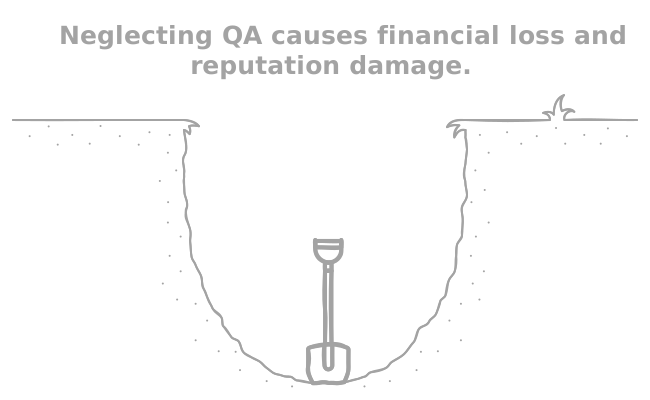
ISO 9001, the most widely adopted standard, centers on quality management systems. By implementing it, organizations gain very concrete benefits:
- Higher customer satisfaction: rigorous quality assurance practices ensure products consistently meet needs and expectations.
- Lower operational costs: orderly processes reduce waste and rework, which lowers the costs tied to production.
- More market opportunities: many international clients require ISO certification as a condition for doing business, so being certified opens doors in the global market.
“Quality means doing it right when no one is looking.” Henry Ford said it, and it captures precisely the spirit behind any serious quality system.
The path to certification begins with a thorough internal audit to identify the gaps against the standards. That exercise pushes teams to document procedures carefully and to involve everyone in quality initiatives, cultivating a culture of continuous improvement that ends up showing in every release.
Aligning with quality standards also has broader implications for compliance in software development. Companies that demonstrate their commitment to best practices through certifications earn trust from clients and partners, and at the same time reduce the risks tied to non-compliance. In an environment where adherence to standards is scrutinized more and more, being able to show solid quality management systems stops being a luxury and becomes a condition for entry.
In short
Compliance in Mexico combines a legal framework, data protection, cybersecurity, quality certifications, and international requirements best addressed by design rather than as a late correction. The path may look intricate, but understanding and implementing these rules is exactly what separates products that endure from those that stumble. That is why the best strategy is to build compliance into the development process: deciding deliberately what data is collected, where it is stored, and how it is deleted, so the product adapts when the rules change.
At LabWeb we build software with compliance integrated into the architecture, not bolted on at the end, so your product can operate with confidence inside and outside the country. If you are looking for a partner who turns regulation into an advantage rather than an obstacle, that is exactly the ground we work on.