
An idea, on its own, is worth little until it’s executed, but the work around it does deserve protection. For many founders, the startup is their most valuable asset, and they discover too late that they never secured their brand, their code, or their agreements. The good news is that protecting a startup is no mystery reserved for lawyers: it comes down to a handful of legal tools used in time. This is general guidance, not legal advice, written for founders building from Mexico.
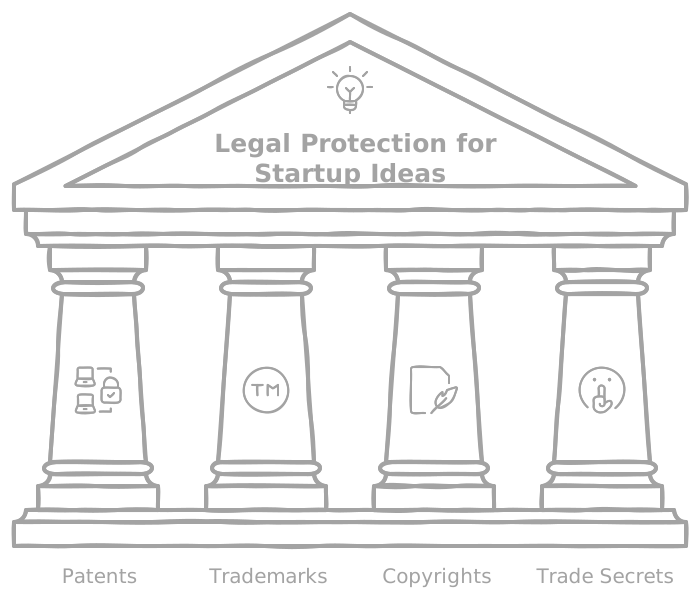
- Intellectual property: patents, trademarks, copyright, and trade secrets, each with a distinct purpose.
- Solid agreements: NDAs and contracts that put in writing who owns what.
- Timely registration: securing name, logo, and code before launch, not after the conflict.
- Counsel when it counts: a real lawyer for the high-stakes moments.
Understanding intellectual property for startups
In the world of startups, understanding intellectual property is like holding a treasure map through the risks of exposing your ideas by accident. It covers creations of the mind, from inventions and written works to designs, symbols, and names used in commerce. Mastering these concepts not only protects your company, it raises its value when the moment comes to raise capital or close a partnership. It helps to start by recognizing that there isn’t a single form of protection, but several, and each covers a different front.

Recognizing the different types of intellectual property lets you plan a strategy instead of improvising. Each category plays a concrete role in safeguarding what your startup offers uniquely:
- Patents: ideal for inventions or novel processes, they grant the exclusive right to make, use, or sell an innovation for a set period, typically twenty years. In Mexico they’re run by the Mexican Institute of Industrial Property (IMPI).
- Trademarks: they protect your product’s name and logo, and keep a competitor from operating under an identity confusable with yours. Registration is reassuring for how little it costs against how much it prevents.
- Copyright: it automatically covers original works, such as code, copy, or graphics, from the moment they’re created. You don’t need to register them to hold the rights, although registering adds legal backing.
- Trade secrets: confidential information that gives a competitive edge, such as a customer list or a proprietary formula, which keeps its value only as long as it stays under wraps.
The importance of these protections is hard to overstate: they form your startup’s legal armor against copying or misuse. The key, as Benjamin Franklin’s old line about an ounce of prevention being worth a pound of cure suggests, is to fold them into your business strategy early rather than treat them as a late formality.
Patents: protecting an invention step by step
Patenting an idea is more than a formality: it’s a step that can define the future of your venture, especially if your product rests on a genuinely new invention. The procedure can feel intimidating, but it becomes manageable once you break it into stages. First, confirm that your idea is actually patentable, because not everything valuable qualifies.
For an invention to be patented, it’s usually required to meet three basic conditions. It pays to review them honestly before investing time and money in the process:
- Novelty: it must be new and different from anything previously disclosed, sold, or patented.
- Inventive step: it should not be an obvious extension of technologies or products already in your field.
- Industrial application: it has to serve a practical purpose and be capable of being made or used.
Once those criteria are confirmed, the next step is a prior-art search to verify your invention is unique; public patent-search tools help here. Then comes drafting the application: a detailed description of how the invention works, the claims that define the scope of protection and, where relevant, supporting drawings. The application is filed with the appropriate office, the IMPI in the Mexican case, and you should be ready for some back-and-forth with examiners before the grant.
“The patent system added the fuel of interest to the fire of genius.” Abraham Lincoln
Approval time varies widely, from several months to years, so patience is part of the process. Consider filing a provisional application first: it gives you a temporary shield while you refine a fuller version. This is not a path for cutting corners, because a minor mistake can cost you valuable rights, and that is where specialized counsel earns its keep.
Trademarks: registering your identity in Mexico
When it comes to protecting your brand and ensuring it lasts, understanding the registration process in Mexico is essential. A trademark safeguards your company’s identity and reinforces customer loyalty, so the path demands attention to detail. In Mexico, trademark registration is overseen by the IMPI, and following its stages in order avoids costly surprises down the line.
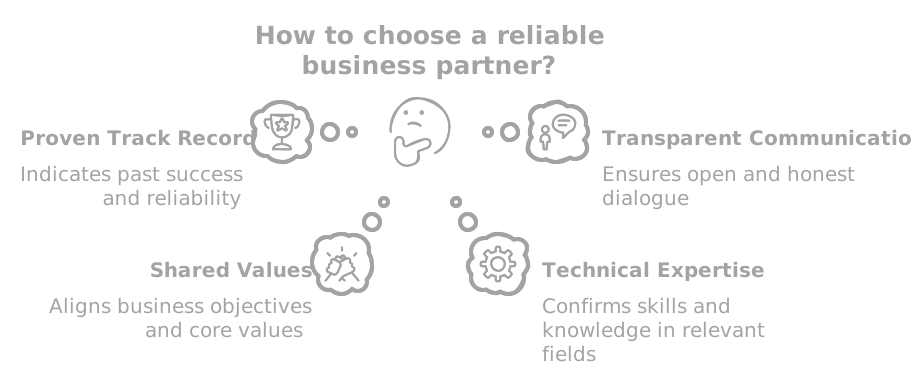
The process follows a clear sequence worth knowing before you file. Getting ahead of each step saves you time and possible disputes:
- Preliminary search: before applying, confirm the desired mark is unique and not already registered by someone else. This step avoids rejections and needless legal conflicts.
- Examination: after you file, the IMPI checks that the application meets legal requirements and doesn’t clash with existing marks. If an issue arises, you’ll be asked to clarify it or amend the application.
- Publication in the Gazette: once it clears examination, the mark is published so third parties can oppose if they believe it affects their rights.
- Registration and certificate: if no oppositions are filed within the term, or they’re resolved in your favor, the IMPI grants the registration and issues the certificate confirming ownership.
The full process can take anywhere from about six months to several years, depending on complexity. A robust trademark strategy doesn’t end with registration: it includes actively monitoring for misuse, since being proactive saves you costly litigation later.
“A brand is no longer what we tell the consumer it is, it is what consumers tell each other it is.” Scott Cook
Your trademark isn’t just a symbol: it’s a promise of quality and consistency that customers learn to recognize over time, and every step to secure it legally strengthens its position in the market.
Copyright and trade secrets: protecting code and designs
In Mexico, the law grants automatic protection to original works, but understanding the nuances of copyright is vital for any founder. Copyright protects the concrete expression of an idea, not the idea in the abstract: your concept may not be registrable as such, but the specific way you express it, the code, the copy, the design, is protected from the moment it exists in tangible form.
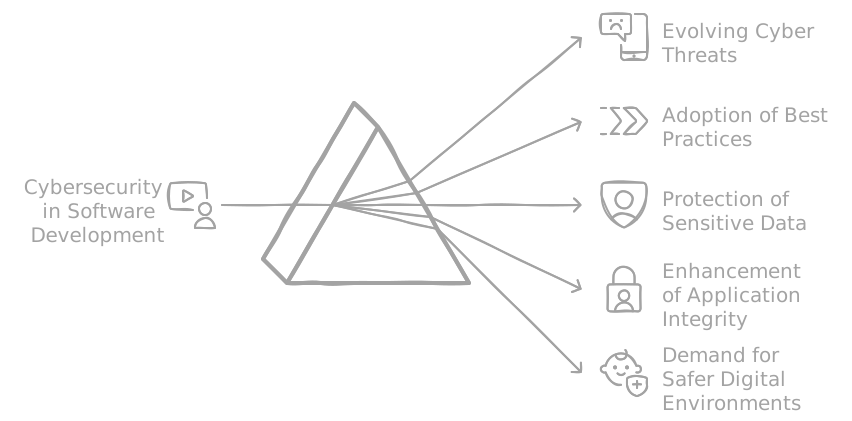
For a tech startup, this covers much of what it produces day to day, and pairing it with sound cybersecurity practices closes the loop between legal and technical protection. The points most worth keeping in mind:
- Broad coverage: copyright applies to software, promotional materials, product descriptions, and your site’s content, from the moment they’re created in tangible form.
- Benefits of registering: although it isn’t mandatory, leaving a record with the appropriate authority provides strong evidence in a dispute over ownership or misuse.
- Document everything: keep drafts, versions, and creation dates; that log helps prove authorship if someone questions it.
- Licensing agreements: if you want to let others use your work without losing ownership, a well-drafted license lets you control how and where it’s used.
To this we add trade secrets, which protect information that gives a competitive edge as long as it stays confidential. Here internal discipline matters as much as paperwork: clear policies, restricted access, and confidentiality agreements signed by the team. Together, these tools make your innovations defensible: others may draw inspiration from your ideas, but they can’t legally duplicate them without your permission.
The role of NDAs and contracts with developers
In the startup arena, non-disclosure agreements (NDAs) are a key tool for keeping under wraps what you don’t yet want public. An NDA binds the parties not to disclose certain information, and creates a barrier before you share details with investors, partners, or employees. It won’t stop someone determined to copy you, but it puts the rules and consequences in writing. A good NDA defines what information is confidential, what obligations the recipient has, how long that confidentiality lasts, and what happens if it’s breached.
It’s best used with judgment: asking for an NDA too early, of an investor in the first conversation, sometimes creates more friction than protection. But there’s one scenario where a well-drafted contract isn’t optional but indispensable, and that’s work created by third parties, where one of the costliest mistakes a founder makes is failing to define, in writing, who owns what gets built.
“An ounce of prevention is worth a pound of cure.” Benjamin Franklin
If you hire a developer or an agency to build your product, the contract should explicitly state that the intellectual property transfers to you. Without that clause, you could end up using a product that, legally, isn’t entirely yours, a problem that surfaces at the worst moment: during a funding round or an acquisition. That’s why, when assembling a dedicated development team or commissioning custom software, the assignment-of-rights clause weighs as much as price or delivery timelines.
Building legal defenses from Mexico
Building legal defenses in Mexico isn’t just prudent: it’s an essential part of any serious startup strategy, and getting ahead on it sets the tone for the growth that follows. The first step is understanding the local legal frameworks, because the Mexican system offers several mechanisms to safeguard intellectual property, and knowing them lets you move with confidence instead of blindly.
A solid strategy is holistic: it combines several fronts rather than betting on just one. These are the practices worth making routine from the start:
- Consult experts: working with lawyers who specialize in intellectual property saves you from common pitfalls and tailors the strategy to the Mexican context.
- Well-drafted NDAs: use them when discussing sensitive information with partners or vendors, so everyone understands their confidentiality obligation.
- Document progress: keep a record of your idea’s evolution, from brainstorm to prototype; that documentation is evidence of ownership if a conflict arises.
- Register early: whether patents, trademarks, or copyright, securing your rights at the outset protects you from anyone looking to capitalize on your work.
Generic templates are fine to start, but some moments call for a real lawyer: raising capital, signing with a significant partner, expanding to another country, or defending your intellectual property. A timely consultation costs a fraction of fixing a badly drafted agreement, and the rule of thumb is simple: the more that’s at stake, the sooner professional advice pays off.
“The best way to predict the future is to create it.” Peter Drucker
In short
Protecting your startup is less about the idea and more about securing the work, the brand, and ownership of what you build. The tools are within reach: patents and trademarks at the IMPI, automatic copyright over your code, well-guarded trade secrets, NDAs used with judgment and, above all, contracts that make ownership clear. Using them in time costs a fraction of repairing them later.
At LabWeb we develop products with clear contracts that transfer the intellectual property of your software to you, so you grow on a foundation that is, unambiguously, yours. If you’re building something worth protecting, we’re the kind of partner that makes sure that, from the very first line of code, it all stays in your name.