

Your business needs a digital wallet because it speeds up checkout, strengthens security, and delivers the payment experience your customers already expect, and when you don’t offer it, that friction turns into lost sales. Digital wallets have gone from novelty to expectation, and the gap between adopting them today or putting it off is measured directly in conversion, trust, and growth. This is not about chasing a trend, but about responding to a deep shift in how people pay. Here are the reasons to take them seriously right now:
- A faster checkout and more sales.
- Security that builds trust.
- Cheaper, more efficient transactions.
- The experience your customers already expect.
- Data, reach, and a future-ready business.
A faster checkout, more sales
Paying with a tap or a scan removes the most fragile step of any purchase: entering card details. That moment is where most carts are lost, especially on mobile, where typing a sixteen-digit number is awkward and error-prone. When you cut friction, you cut abandonment, and every point of conversion you win back shows up in your end-of-month revenue.
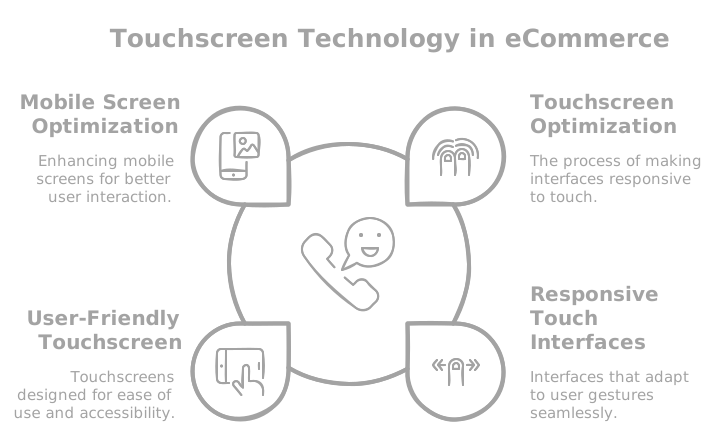
Speed is not just a convenience for the customer: it is operational efficiency for the business. In a physical store, a phone tap or a contactless card clears the line faster; in an online store, a one-click payment with saved details turns a buying intention into a sale before the customer thinks twice. Mobile payment adoption grows year after year, and businesses that already offer that speed capture the people who expect to finish a purchase in seconds. The same logic applies at the counter, in home delivery, and in recurring billing: every manual step you remove is time saved and a smaller margin for error.
What makes a fast checkout translate into more revenue is easier to see broken down:
- Instant transactions: the payment completes in seconds, with no waiting for change and no retyping details on every purchase.
- Streamlined checkout: one-click payment and saved preferences cut steps exactly where most people give up.
- Fewer entry errors: without manual typing, declines caused by a single wrong digit disappear and the transaction flows.
- Always available: customers can pay anytime, from anywhere, with a flexibility cash never offered.
“Speed is not just efficiency: it is building an experience that keeps the customer coming back.”
The takeaway is direct: in an economy where every second counts, a faster checkout is not a luxury, it is the difference between closing the sale and watching it evaporate at the final step.
Security that builds trust
In an era where almost everything is paid for online, security has stopped being a technical detail and become a condition of trust. Digital wallets use tokenization and biometric authentication, which means sensitive card data never travels or gets stored directly. For the customer, that translates into peace of mind; for your business, into lower risk, less exposure, and a reputation that protects itself.
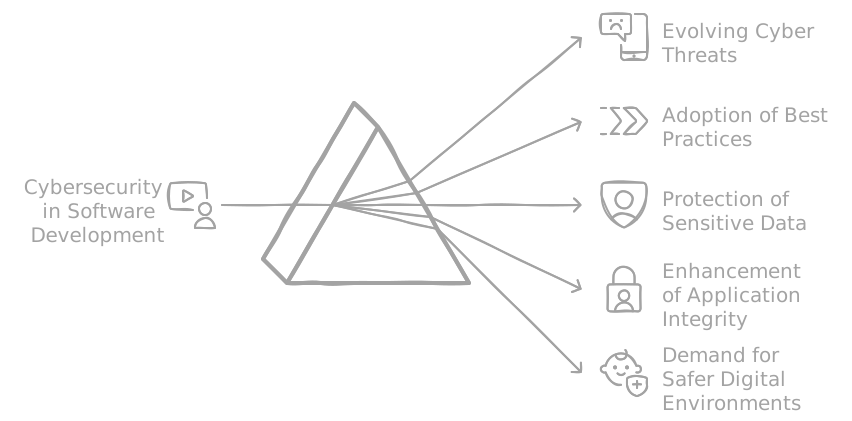
As digital threats grow more sophisticated, offering protected payments stops being optional. A business that signals it safeguards customer data builds credibility in a market that pays ever closer attention to privacy. And that credibility is hard to earn and easy to lose: a single fraud incident can cost more than years of investment in trust. That is why it pays to lean on solid cybersecurity practices from day one, not as a patch added later. Protection does not rest on a single technology, but on several layers working together, with a simple idea behind them: put so many obstacles in front of fraud that attempting it stops being worth an attacker’s time.
The layers that make digital wallets secure reinforce one another:
- Advanced encryption: transaction data travels protected, so even if someone intercepts it, they cannot decipher it.
- Multi-factor authentication: many systems require more than one verification before completing a payment, which sharply reduces unauthorized access.
- Biometric authentication: a fingerprint or facial recognition ensures only the legitimate owner can use their wallet.
- Tokenization: real data is replaced by a unique identifier, so an attacker who breaches a database gets useless tokens, not card numbers.
“Security is not a product, but a process.” Bruce Schneier, a renowned security expert, said it, and it captures why protecting payments is an ongoing practice, not a box you check once.
Investing in secure payments does not just protect customer data: it protects the relationship. In an environment where trust is the most fragile asset, that investment pays for itself.
Cheaper, more efficient transactions
Beyond the experience, digital wallets have a direct effect on the numbers. By digitizing the way you get paid, many businesses cut operational costs compared to traditional methods, and those savings, multiplied by monthly payment volume, become significant. The money once spent on fees and equipment can be redirected toward what actually grows the business.
It helps to put a number on the effect with a well-known example. Starbucks reported billions of dollars in payments made through its mobile app, a clear sign that wallets are not a passing fad but a sustainable way to combine a better experience with lower processing costs. When the saving per transaction is multiplied by millions of payments, the impact on margin stops being theoretical.
The savings come from several fronts worth looking at closely:
- Lower fees: digital payments often offer reduced rates or flatter structures than traditional card fees.
- Fewer chargebacks: stronger verification processes reduce the returns that erode your margin.
- Lower hardware cost: by relying on the device the customer already carries, you cut the investment in physical terminals.
- Simpler reconciliation: centralizing payments on a single platform speeds up accounting and reduces administrative work.
“The best way to predict the future is to create it.” The line, attributed to Peter Drucker, captures the underlying idea: businesses that adopt efficient payments today do not wait for the change, they cause it.
It helps to think of it as a scenario where everyone wins: the customer enjoys fast, frictionless transactions, and the business runs with lower costs and more efficiency. The question stops being why change, and becomes why keep paying more than you have to.
The experience your customers already expect
Offering digital payments doesn’t just make the transaction easier: it signals that your business is current. It’s a mark of modernity and care for the experience that, combined with loyalty programs and recurring payments, strengthens the customer relationship. In a crowded market, that sense of closeness and attention can be exactly what tips a customer’s preference toward your brand.
Loyalty rarely comes from a single gesture: it is built on consistent experiences. A well-integrated wallet lets you embed rewards and benefits right into the payment interface, so the customer gets value at the very moment of purchase. That immediate gratification, combined with a frictionless process, is a proven recipe for getting people to come back. And ease of use weighs more than it seems: when the process is clear and quick, the customer not only buys, they repeat without a second thought and recommend it to others.
The elements that turn a good payment experience into loyalty are easy to recognize:
- Built-in loyalty programs: rewards and promotions that live inside the wallet itself, with no extra apps or cards.
- Frictionless experience: a simple process cuts the effort on every purchase, and ease of use is one of the factors that weighs most when people choose how to pay.
- Diverse payment options: giving each customer their preferred method signals closeness and respect for their habits.
- Immediate gratification: instant access to benefits and discounts that reinforce the decision to buy again.
“Loyalty is not the absence of competition: it is the presence of value.”
When a business adopts well-designed digital payments, it sends a clear message: its customers’ preferences matter. And that attention, sustained over time, is what turns an occasional purchase into a lasting relationship.
Integration with your systems, without internal friction
A digital wallet truly pays off when it connects with what you already run: point of sale, inventory, accounting, and the customer relationship. That integration keeps your workflow intact instead of breaking it, and prevents every payment from turning into an isolated step that someone has to reconcile by hand later. Done well, it does not add complexity: it removes it.
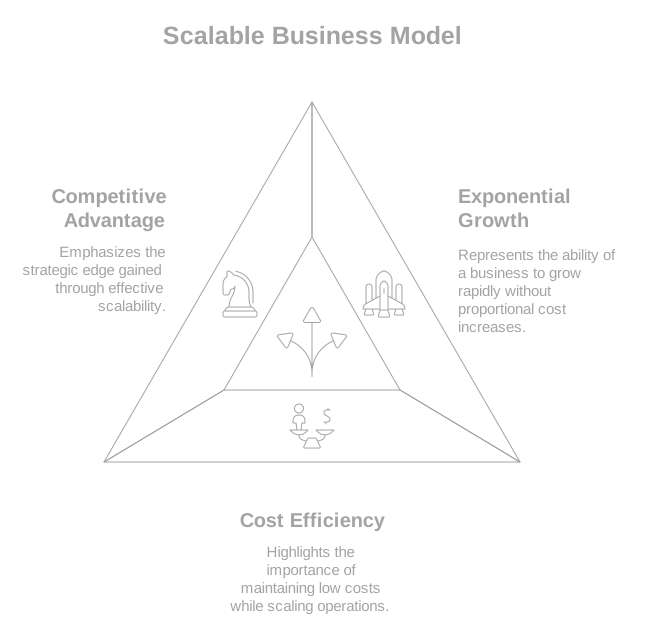
The most visible benefit is operational, but there is another that is less obvious and just as valuable: data. When the wallet feeds directly into your inventory system and your CRM, you stop seeing the business in fragments and start seeing it whole. You know what sells, to whom, and how often, and you can adjust prices, promotions, and restocking with real information instead of hunches. A tailor-made software system, designed to integrate with your current processes, also sets the stage for growth: it lets you add volume and new payment methods without rebuilding everything from scratch, as long as the integration is designed from the start and not improvised under pressure.
The fronts where a well-built integration makes a difference are clear:
- Smoother operations: by removing manual steps between the payment and your systems, transactions move faster and with fewer errors.
- Better customer insight: connecting payment data with your CRM enables more personalized strategies and better-targeted campaigns.
- Real-time cash flow: seeing money in and out instantly improves forecasting and financial decision-making.
- Scalability: an architecture built to grow saves you from reworking operations every time the business takes a leap.
“Integration is not just about technology: it is about creating connections that drive value.”
The takeaway is clear: adopting a wallet does not have to be a painful project. When it integrates well with what you already use, it strengthens operations and leaves the business ready to respond to whatever customers ask for tomorrow.
Data, reach, and a future-ready business
Every digital transaction generates valuable insight into buying habits, and opens the door to a user base that prefers, or only uses, mobile payment methods. In a market like Mexico’s, that also means reaching people who are leaving cash behind. But the real value appears when that data becomes decisions: understanding what is bought, when, and how lets you refine your offering instead of guessing.
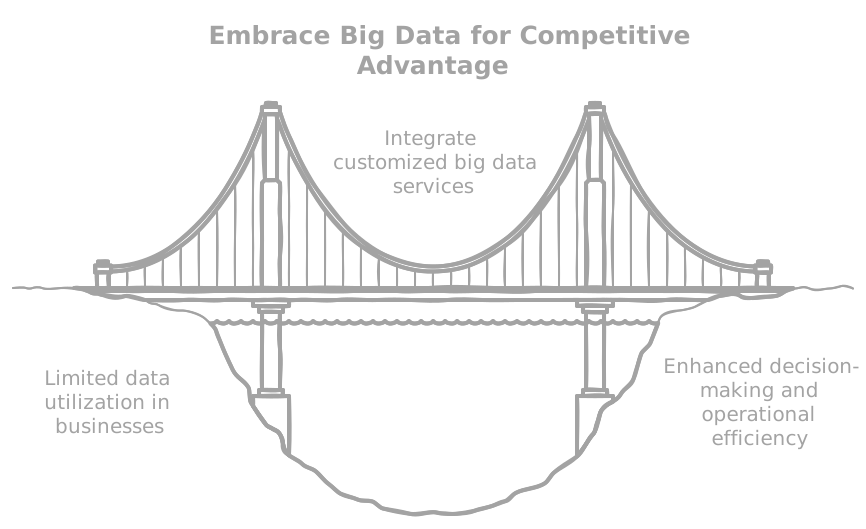
That reach also has a global dimension. Wallets that support multiple currencies let you sell across borders without the customer worrying about conversions or hidden fees, opening markets that once felt out of reach. And the ability to add cryptocurrency payments brings in a segment of young, digitally active consumers who value exactly that flexibility. Platforms like Airbnb, which accepts payments in dozens of currencies, showed just how much that openness fuels international growth.
Thinking about the future also means thinking about scale. Global e-commerce keeps growing at a healthy pace, and a business that operates online without a modern way to get paid is limiting itself.
What makes a digital wallet a bet on the future, and not just an improvement on the present, comes through in layers:
- Business intelligence: the data from each purchase reveals patterns that help personalize the offer and make better decisions.
- International reach: multi-currency support and digital payments open sales to customers in other regions without friction.
- Openness to new methods: adding cryptocurrency and contactless payments draws in people who already operate that way and widens your market.
- Adaptability: a flexible platform lets you fold in whatever comes next without reinventing operations each time.
“To stay relevant in today’s market, a business must treat change as a constant.”
The future of payments is, without doubt, digital, and those who lag behind risk being left out entirely. Adopting a secure, scalable, well-integrated wallet today is not just keeping pace: it is taking the lead in an economy moving toward mobile without looking back.
In short
A digital wallet isn’t just one more payment method: it’s speed, security, efficiency, a better experience, and a business ready for what comes next. Adopting it in time means turning every payment interaction into a chance to sell more, retain better, and understand your customers with real data. Putting it off, on the other hand, hands that advantage to whoever does take the step.
At LabWeb we integrate secure, tailor-made digital payment solutions, connected to the systems you already use, so getting paid is as easy as your customers expect. If you want your way of getting paid to stop being a brake and become an advantage, we are exactly the kind of partner to build it with you.