Web app development moves fast, and user expectations move even faster: today an app needs to be quick, smart, and reliable from the very first second. The trends setting the direction are performance as the starting point, AI-powered features, edge computing, and component architectures with progressive web apps. None of them is a passing fad: they are answers to a more demanding user and to competition measured in milliseconds. Here’s what they mean for the end experience, and why it pays to adopt them today rather than tomorrow.
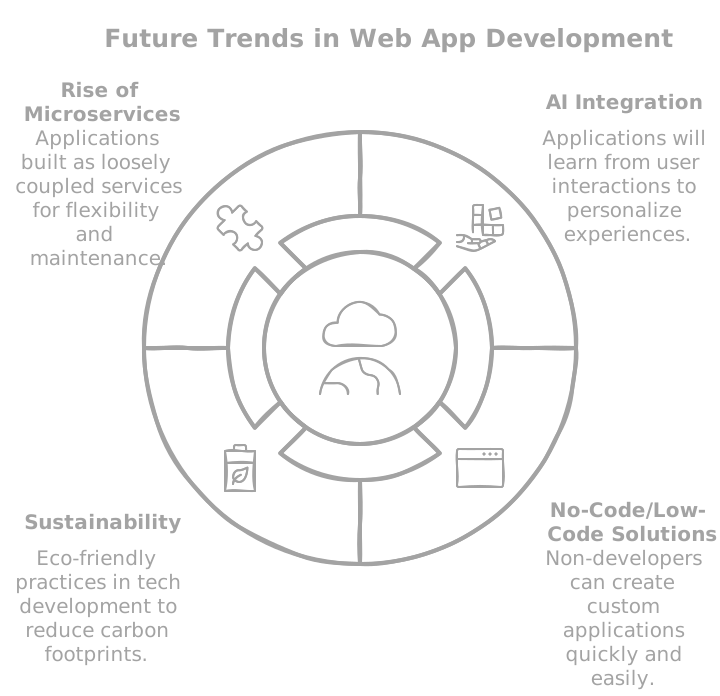
The trends setting the direction:
- Performance first: minimal payloads and optimized delivery from the design stage, not at the end.
- AI in the experience: search, recommendations, and personalization that anticipate the user.
- Edge computing: serving content close to the user to cut latency.
- PWAs and components: installable apps and reusable code that evolves without becoming fragile.
Performance as the starting point
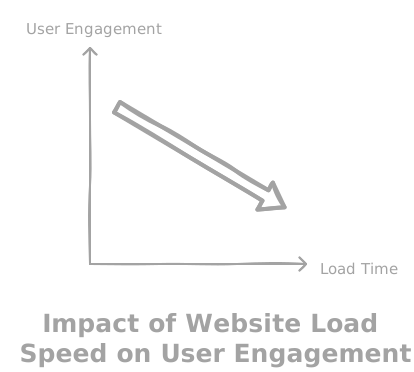
Speed has stopped being a luxury and become a basic expectation: a slow site loses users before it can show its value. That’s why modern development prioritizes performance from the design stage, with minimal payloads, efficient rendering, and optimized delivery, instead of optimizing at the end when fixes are expensive. A fast application doesn’t just feel better: it converts better, ranks better, and retains more, because every second of waiting is an invitation to leave.
The impact shows up in concrete numbers. Google documents that the probability of a bounce rises sharply as load time goes from one to several seconds, and its user-experience metrics, the Core Web Vitals, are already part of the signals that order search results. In other words, performance has stopped being an internal technical matter and become a factor of business and visibility.
Building fast by default takes decisions from the first commit, not patches at the end:
- Performance budget: set clear limits on weight and load time, and treat them as a requirement, not a wish.
- Efficient rendering: choose between server rendering, static generation, or partial hydration based on what each screen actually needs.
- Optimized delivery: compress, split code into chunks, and load only what’s necessary, so the browser doesn’t download what it won’t use yet.
- Images and fonts under control: modern formats, right sizes, and lazy loading, since they tend to be the heaviest weight on the page.
“Performance is a feature, not an afterthought.” This maxim, repeated across the web engineering community, captures the shift in mindset well: speed is designed, not rescued.
AI-powered features
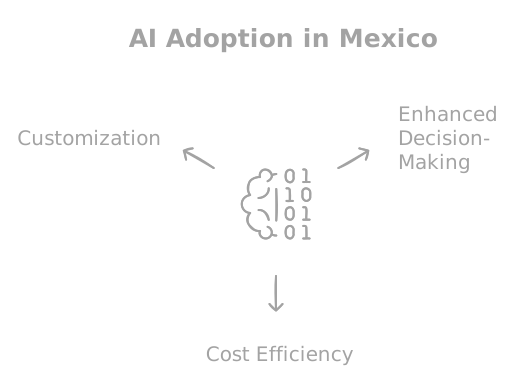
Artificial intelligence is becoming a natural part of the web experience: smarter search, recommendations, assistants, and real-time personalization. Applied well, AI anticipates what the user needs and reduces the steps to get there. The key is integrating it where it adds real value, not as decoration, but as something that makes the application more useful and less demanding for whoever uses it.
The change isn’t only about features, it’s about expectations. The user who got used to a streaming platform suggesting the next series, or a search engine understanding what they meant even when they typed it wrong, expects that same level of anticipation in any digital product. That higher bar turns personalization into a concrete competitive advantage, not a luxury.
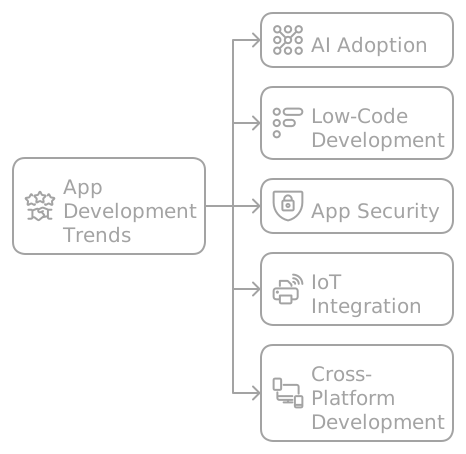
The areas where AI delivers tangible value are increasingly clear:
- Real personalization: content and recommendations that adapt to each user’s behavior, instead of one screen for everyone.
- Search that understands intent: results based on what the person wants to accomplish, not just the exact words they typed.
- Conversational assistants: chatbots with natural language processing that answer questions instantly and free the support team from repetitive tasks.
- Sharper security: models that detect anomalous access patterns and help stop an incident before it escalates, a point where cybersecurity and AI meet naturally.
“The greatest danger in times of turbulence is not the turbulence: it is to act with yesterday’s logic.” Peter Drucker said it, and it fits AI adoption perfectly: clinging to old methods when technology has changed the rules is the most expensive risk of all.
Integrating AI well doesn’t mean adding features for the trend, but asking at which point in the journey the user gains time or clarity. That discipline is the difference between an app that looks smart and one that truly is.
Edge computing and the cloud as a foundation
Processing and serving content from the edge, closer to whoever uses it, reduces latency noticeably. Instead of traveling to a distant central server, the application responds from a nearby point, which means smoother interactions regardless of location. For distributed audiences, that proximity is what sustains a consistent experience at global scale, and it has become a de facto standard for products that aim to grow.
Behind the edge sits a larger shift: the cloud consolidating as the foundation of modern development. The cloud brings elasticity, fast deployments, and a pay-as-you-go cost model that lets you start small and scale without rebuilding everything. That flexibility fits naturally with agile methodologies, which advance in short iterations and need infrastructure able to keep their pace. Scalability stops being a future problem and becomes a property of the design from day one.
What makes this combination attractive shows up on several fronts:
- Lower latency: serving from the nearest point makes the app respond fast for users in any region.
- Scaling without surprises: absorbing demand spikes without paying upfront for physical infrastructure that would sit idle most of the time.
- Cost per use: paying for what you consume improves budget predictability and avoids sunk spending on hardware.
- Global collaboration: distributed teams work on the same data in real time, no matter where each person is.
“In today’s environment, organizations must embrace change or risk extinction.” The line, attributed to John Chambers, captures why the cloud and the edge stopped being optional: proximity and elasticity are now part of what the user takes for granted.
Component architectures and JavaScript frameworks
Component-based architectures make development more maintainable and consistent by reusing proven pieces instead of reinventing the same wheel on every screen. A well-built component is tested once and reused many times, which reduces bugs and speeds up delivery. That modularity is what lets a product grow without becoming fragile, and what makes it viable for several teams to work in parallel without stepping on each other.
In that territory, JavaScript frameworks remain the engine. React, Vue, and Svelte popularized thinking in components, while frameworks built on top of them added server rendering and static generation, both key for performance and for letting search engines index better. The underlying trend points to shipping less JavaScript to the browser and hydrating only what’s needed, a direct answer to the pressure for lighter, faster sites.
The practices that sustain this approach are consistent across stacks:
- Real reuse: components with a single responsibility, easy to test and to combine like blocks.
- Appropriate rendering: choosing server, static, or client per view, instead of applying the same recipe to everything.
- Less JavaScript to the client: shipping the minimum for the page to be interactive, leaving the rest of the work where it costs least.
- Design systems: a shared component library that keeps visual coherence and speeds up the whole team.
This way of building connects directly with custom software development: when each piece is independent and reusable, adapting the product to a business’s specific needs stops being a rewrite and becomes an assembly. For startups that need to move fast without piling up technical debt, that difference is enormous.
User experience as a differentiator
A polished interface is no longer an aesthetic detail: it’s a factor that decides whether the user stays or leaves. The Nielsen Norman Group documents that people form their first impression of a site in a fraction of a second, so design gets a single chance to convey trust. Add that every dollar invested in user experience tends to return far more in retention and conversion, and the business case for taking design seriously is hard to ignore.

Good experience is built with principles, not hunches. Visual consistency creates familiarity; user-centered design starts from real needs rather than the company’s internal priorities; and microinteractions, those small responses to every action, make the app feel alive and understandable. Accessibility, far from being an add-on, broadens reach and improves quality for everyone.
The pillars that sustain an interface that works:
- Consistency: a coherent visual language in color, typography, and layout that reinforces brand recognition.
- User-centered design: decisions validated with usability testing, not desk assumptions.
- Microinteractions: subtle animations that give immediate feedback and make interactions more natural.
- Real accessibility: alternative text, sufficient contrast, and keyboard navigation, following open guidelines like those from MDN so no one is left out.
“Design is not just what it looks like and feels like. Design is how it works.” Steve Jobs’ line is still the best reminder that experience doesn’t end at aesthetics: a beautiful interface that confuses fails just as much as a functional one that repels.
PWAs: the line between web and app blurs
Progressive web apps blur the line between web and native app: they’re installable, work offline, and send notifications, all without going through an app store. For the user, that means opening an icon on their home screen and getting an experience close to a native app; for the business, it means a single codebase that reaches more devices with less maintenance effort.
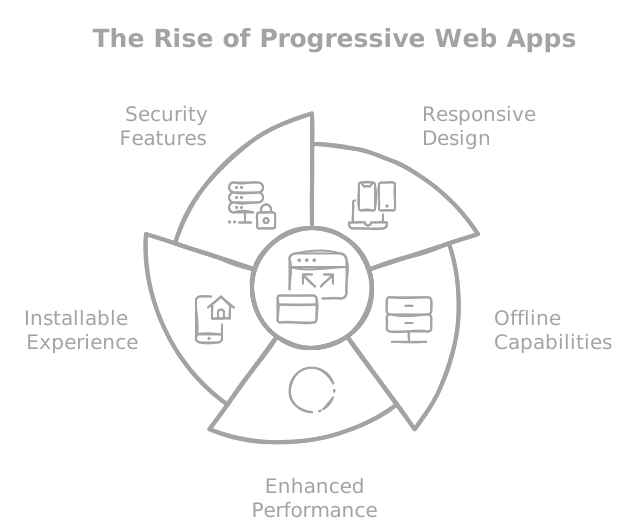
The appeal is both technical and economic. Thanks to service workers and caching, a PWA loads fast even on unstable networks and can show content offline, something that reduces abandonment. And by not depending on store approvals, updates ship straight from the server, which simplifies the delivery cycle and brings PWAs closer to the agile development practices many teams already use.
Why more and more products bet on this approach:
- Offline support: service workers let the app keep working without a connection and sync when the signal returns.
- A single codebase: developing a PWA tends to be more economical than maintaining separate native apps for each platform.
- No install friction: they’re accessed from the browser and installed with one tap, without heavy downloads or store paperwork.
- Instant updates: changes reach the user immediately from the server, without waiting for external approvals.
“The best way to predict the future is to create it.” The line, popularized by Peter Drucker, fits the spirit of PWAs: instead of waiting for store rules to change, this approach builds its own path to the user.
In short
The future of the web points to applications that are fast, smart, and close to the user, built on solid and maintainable architectures. Performance as the starting point, AI where it genuinely helps, the edge and the cloud as a foundation, reusable components, and a polished user experience are not loose trends: they are pieces of one same way of building digital products that age well. At LabWeb we develop web applications aligned with these trends, focused on performance, scalability, and experience, so your product feels modern today and stays that way tomorrow. If you’re thinking about building or renewing an application that can keep the pace, we’re the kind of partner that turns these ideas into something your users feel from the very first second.