For a long time, custom software was seen as a luxury reserved for large corporations. That has changed. Today small businesses can access applications built to fit them, tools that let them automate tasks, organize operations, and compete with much bigger players. What once demanded million-dollar budgets and entire technology teams now fits inside a focused project, validated step by step and designed around how the business actually works. This is not a passing trend: it is a fundamental shift in how operations are run and how customer relationships are cultivated.
The question is no longer whether a small business can afford custom software, but what it costs to keep running on generic tools that never quite fit. These are the pillars of that transformation:
- Automating the tasks that eat the day.
- A tool that scales at the pace of the business.
- Integration with the systems you already use.
- A closer, more consistent relationship with your customers.
- Real access, within a sensible budget.
Automating what used to eat the day
Small businesses often carry manual processes (quoting, order tracking, spreadsheet records) that devour valuable hours. A custom application automates exactly those repetitive tasks and shapes them around how the business actually works, not the other way around. The result is a team spending its time selling and serving customers, not copying data from one place to another or fixing errors that came from an improvised process.
The difference with generic software runs deep. An off-the-shelf tool forces you to bend your operation to fit its fields and its flows; a custom one does the opposite, modeling your business as it really is. That precision shows up in the numbers: fewer manual steps mean fewer errors, less rework, and faster decisions because the information is where it needs to be. Productivity studies consistently find that businesses automating their core processes recover a meaningful share of the time once lost to administrative busywork.
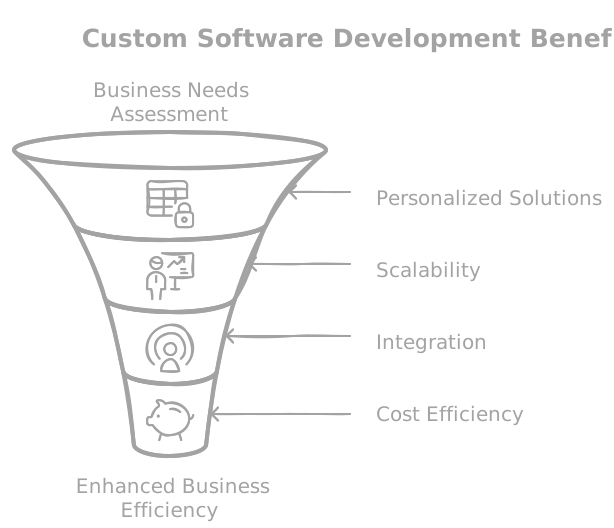
It helps to pin down where those savings actually appear:
- Less manual entry: data is captured once and flows between modules, with no re-keying that invites mistakes.
- Processes that mirror your reality: the system follows your business rules, not templates built for another industry.
- Real-time visibility: orders, inventory, and open tasks stop living in scattered emails and move into one place you can query.
- Time freed for what matters: the hours once spent on mechanical work get reinvested in customers, product, and sales.
“The greatest danger in times of turbulence is not the turbulence; it is to act with yesterday’s logic.” Peter Drucker said it, and it captures why running by hand when fit-for-purpose tools exist is, today, a self-inflicted disadvantage.
A tool that grows with you
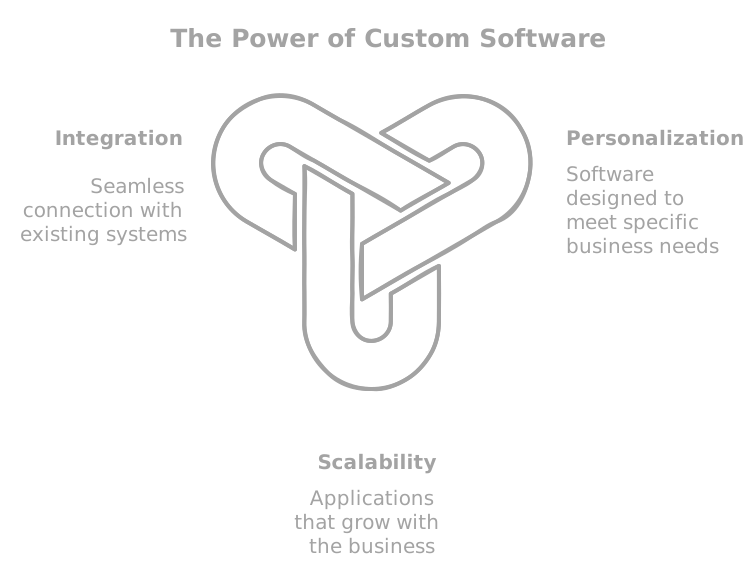
Off-the-shelf software forces the business to bend to it; custom software does the opposite. You start with the essentials and add capabilities as the business evolves, without paying for modules you don’t need yet or coming up short when it is finally time to grow. That flexibility is crucial for a small business, where priorities shift fast and every dollar invested has to earn its keep.
Scalability is not a technical luxury, it is survival. A well-designed application handles more users, more operations, and more data without having to be rebuilt from scratch. That avoids the most expensive scenario of all: discovering, right as the business takes off, that the tool which got you here cannot take you any further. Building with growth in mind from day one is far cheaper than redoing everything under pressure.
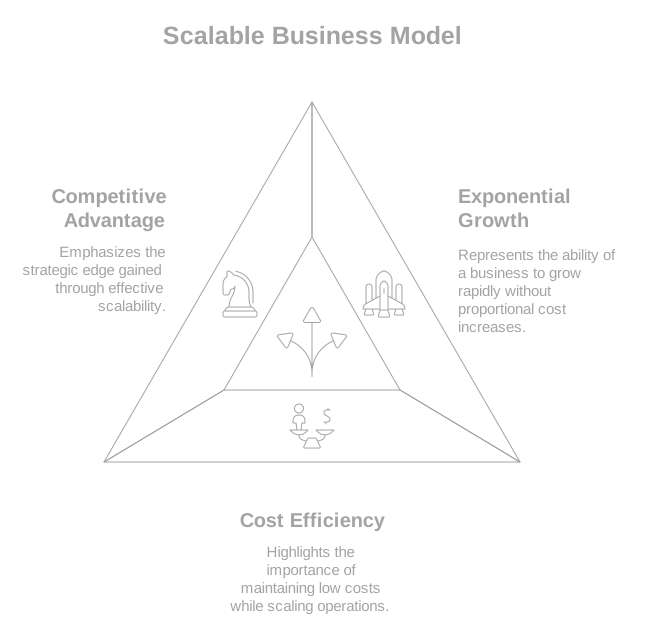
An architecture built to scale shows itself through concrete signs:
- Growth in stages: you start with a focused scope and add features as the business asks for them, not before.
- Capacity without surprises: more customers and more transactions don’t force a restart or spike costs overnight.
- Investment that pays off: you pay for what you use today while leaving the ground ready for tomorrow.
- Integration with what you have: the system coexists with your current tools (billing, payments, messaging) instead of forcibly replacing them.
Integration deserves its own emphasis. Much of the value of a custom application lies in connecting with what you already use, rather than forcing you to juggle several platforms that don’t talk to each other. A tool that speaks to your payment system, your billing, and your sales channels removes islands of information and gives you a single version of the truth about your business.
Better relationships with your customers
Knowing and serving customers well is a small business’s natural advantage, and the right software amplifies it. An application that centralizes history, orders, and communication makes it possible to stay personal and consistent, even while growing. Personalization stops being a slogan and becomes something the system upholds every day, without depending on one person’s memory.
The impact reaches beyond internal performance: a good user experience, with intuitive interfaces and features built for your audience, changes how buyers perceive you. A shop can offer recommendations based on past purchases, remember preferences, or launch loyalty programs that feel tailored to each person. That level of attention, which large chains solve with enormous budgets, a small business can achieve with one well-focused application.

Closeness stops depending on heroic effort and becomes backed by the system:
- Unified history: every interaction, order, and conversation is recorded and available to the whole team.
- Timely communication: alerts about new products, promotions, or order status arrive at the right moment, not late.
- Consistent service: the quality of attention doesn’t drop when demand grows or staff turns over.
- Decisions with data: purchase and behavior patterns reveal what works and what is worth adjusting.
“Innovation distinguishes between a leader and a follower.” The line is Steve Jobs’s, and it sums up why those who bet on custom software tend to get ahead of competitors still tied to generic solutions that don’t know their customer.
Choosing the right development partner
Building custom is, above all, a relationship. The difference between a solution that transforms the business and a disappointing expense usually has less to do with the technology and more with who builds it with you. That is why choosing the development team deserves real attention, especially when it is the first serious investment in technology.
You don’t need to be a technical expert to evaluate a potential partner well, you just need to know what to look for and which questions to ask. A good ally understands your industry, proposes rather than merely executes, and communicates clearly from the very first conversation. Cultural and time-zone closeness also matters more than it seems: working with a team you can coordinate with in real time, instead of waiting twelve hours for every answer, keeps the project moving with fewer misunderstandings and faster decisions.
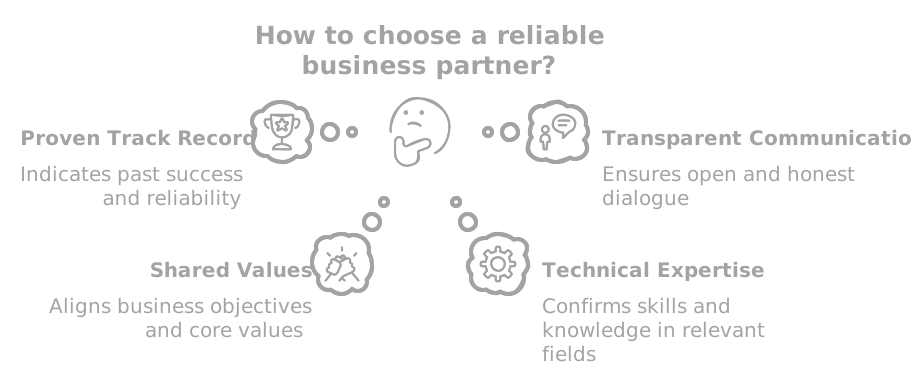
Before committing, it is worth reviewing a few key points:
- Provable experience: a real track record on similar projects anticipates challenges and shortcuts a novice team would discover too late.
- Portfolio and references: past work and client testimonials say far more than any sales pitch.
- A focus on scalability: make sure what they build can grow with you and won’t box you into a technical dead end.
- Communication and support: speed and clarity in the early conversations tend to predict how the partnership will feel throughout the project.
“Good communication is just as stimulating as black coffee, and just as hard to sleep after.” The observation is Anne Morrow Lindbergh’s, and it fits squarely here: without fluid dialogue between your business and the technical team, even the best plan drifts.
More accessible than ever
The big shift is that building custom no longer means unreachable budgets. Modern tooling, cloud services, and development focused on the essentials have lowered the barrier to entry dramatically. A small business can start with a focused application, validate it with real users, and expand, all within a realistic budget and without choking the company’s cash flow.
That change rests on a broader trend: the digital economy is one of the most important engines of growth worldwide, and the tools to build in it have never been more accessible. Bodies such as the OECD document how the digital transformation of small and medium businesses became a decisive factor for competitiveness and productivity. In other words, custom software went from being an exotic differentiator to an increasingly expected piece of any business that wants to grow in earnest.
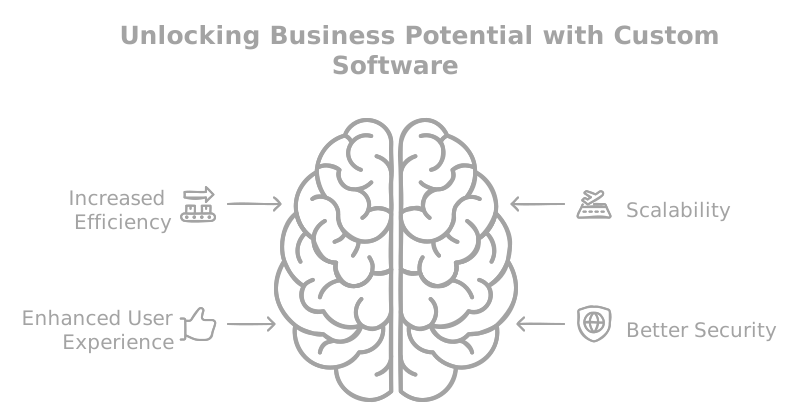
The key is to start small and let the system grow on evidence. Instead of betting the whole budget on one enormous project before validating anything, it pays to build a first scope that solves the most urgent pain, measure how the team and customers use it, and expand only what proved its worth. That staged approach lowers risk, keeps spending orderly, and turns every new feature into an informed decision rather than a blind bet. For a small business, that discipline is exactly what makes the technology investment sustainable.
It helps to spell out what actually lowered the barrier to entry:
- Cloud services: infrastructure is rented as you use it, with no large upfront outlay on servers or specialized hardware.
- Staged development: a focused first scope goes live quickly and starts generating value while the next step is being planned.
- Early validation: testing with real users from the start avoids building features nobody asked for and aims the budget where it pays off.
- Predictable maintenance: support and improvements stop being surprises and get planned as a natural part of the cost of operating.
The ground where this gets built matters too. Mexico, for instance, combines abundant technical talent, competitive costs, and proximity to large markets, which makes it a solid base for developing quality software without the prices of saturated hubs. For a small business, that means access to teams capable of building serious solutions within a budget that would have been unthinkable a few years ago. The conversation about cybersecurity, maintenance, and future growth stops being a roadblock and becomes a natural part of the plan.
In short
Custom development levels the field: it gives small businesses the efficiency, scalability, and sophistication once reserved for the giants, without forcing them to give up the closeness that makes them special. Automating the repetitive, growing without rebuilding everything, integrating what you already use, and serving each customer better have stopped being privileges and become decisions within reach of any business willing to compete.
At LabWeb we design applications tailored to growing businesses, built to automate, scale, and compete without losing that closeness. If your operation already needs more than spreadsheets and generic tools, we are exactly the kind of partner that turns that need into a real advantage.