The way we touch screens has changed the way we shop. Swiping, pinching, and tapping are no longer novel gestures, they’re the natural language of mobile commerce. For online stores, mastering that touch interaction is the difference between a smooth sale and an abandoned cart. In a market where competition is fierce and customer expectations keep climbing, the touchscreen stopped being a luxury and became the ground where conversion is won or lost.
Picture browsing your favorite store with swipes and taps that respond instantly, no reloads and no friction. That fluid interaction isn’t just comfort: it creates an environment that invites people to explore and buy. These are the fronts where touch innovation is making the difference:
- Mobile as the primary shopping channel.
- Natural gestures that reduce friction.
- Immersive product experiences.
- Haptic feedback that connects with the user.
- A direct impact on conversion.
Mobile is no longer secondary
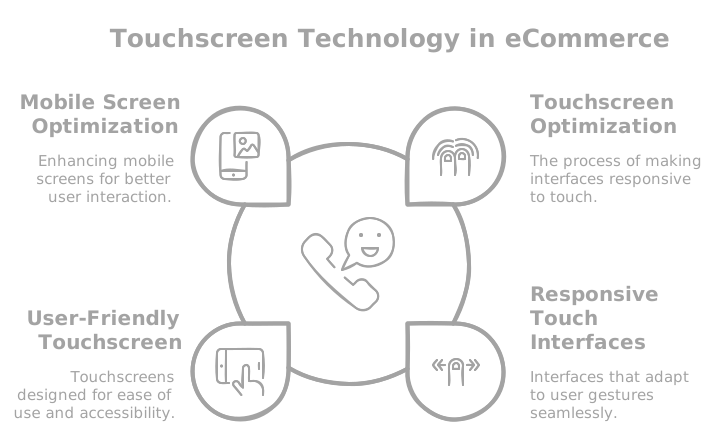
Shopping from a phone has gone from being an option to being the option for a large share of users. Mobile commerce already accounts for most of the traffic to many online stores, and that trend forces a reversal of the design order: the small screen first, the desktop second. A mobile-first experience isn’t adapting desktop to phone, it’s designing for how people actually touch, scroll, and decide with their thumb.
That shift in focus has very concrete consequences for design. A button driven on desktop by a precise click needs, on mobile, a comfortable area for the finger. A form filled in seconds on a laptop can become a wall if it demands excessive typing on a small screen. The tactile detail, the one so often overlooked, is exactly what decides whether the purchase gets completed or abandoned one step from checkout.
- Generous touch targets. Buttons and links must be large enough to tap without error; a target that’s too small produces missed taps and frustration.
- Thumb-friendly navigation. Primary actions belong in the zone the thumb reaches naturally, not in awkward corners.
- Minimal forms. Every field removed or auto-filled shortens the path to checkout and reduces cart abandonment.
- Performance as the foundation. An elegant gesture is useless if the page lags; load speed underpins the entire touch experience.

“Design is not just what it looks like and feels like. Design is how it works.” Steve Jobs said it, and it captures why the tactile detail isn’t decoration but the mechanics that hold the sale together.
Gestures that feel natural
The best e-commerce experiences lean on gestures the user already knows from daily life: swiping between product photos, pinching to zoom with two fingers, dragging to filter, or pulling down to refresh. When interaction mimics movements the person already commands, there’s no learning curve: the customer focuses on the product and forgets the interface. That’s the goal, for the technology to disappear and leave only the buying decision.
Gesture recognition turned navigation into something almost physical. Instead of hunting for menus and buttons, the user flips through a digital catalog with the same ease they’d page through a magazine. Big brands understood this early: travel apps that let you swipe between options, fashion stores that let you rotate a garment with a flick of the hand. In every case the pattern is the same: fewer steps, more sense of control.
- Swipe to explore. Moving between images or categories with a sideways gesture is faster and more intuitive than loading new pages.
- Pinch to zoom. Two-finger zoom lets shoppers examine textures and detail, decisive in clothing, jewelry, or electronics.
- Drag to filter. Sliders for price or size feel more direct than typing values into a field.
- Consistent gestures. Respecting the operating system’s conventions avoids confusing users with invented interactions no one asked for.
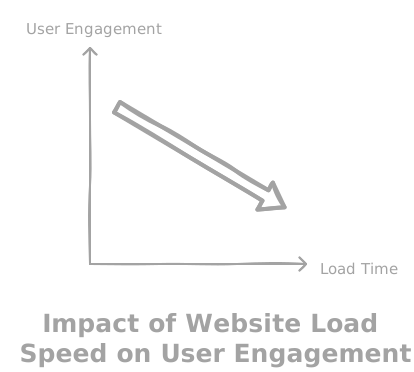
That naturalness has a measurable effect: when the flow feels intuitive, bounce rate drops and exploration time rises. No one abandons a store where moving around is easy; a clumsy interface, by contrast, drives the customer away before they ever see what you wanted to sell.
“The best interface is no interface.” Golden Krishna put it that way to remind us that the ideal design is the one you barely notice, because it lets the task flow without obstacles.
More immersive product experiences
Touch technology opens the door to exploring products in ways once impossible online: rotating an item 360 degrees, revealing details with a tap, changing color or variant without reloading the page. This immersion brings digital shopping closer to the experience of holding the product, and that closeness completely changes the confidence with which the customer moves toward checkout. When someone clearly understands what they’re buying, they hesitate less and return less.
The difference shows most in categories where detail matters. A shopper who can spin a pair of shoes, zoom into the stitching of a jacket, or gauge the real thickness of a piece of furniture makes a far more informed decision than someone looking at a static photo. That information reduces uncertainty, and uncertainty is the main reason a full cart ends up abandoned. Immersion, in that sense, isn’t a visual indulgence: it’s a tool to sell better and return less.
- 360-degree views. Rotating the product with a finger removes blind spots and answers doubts before they turn into objections.
- Detail zoom. Smooth zoom reveals materials and finishes a small image could never convey.
- Live variants. Switching color, size, or configuration without leaving the page keeps the buying impulse intact.
- Fewer returns. The better the experience represents the real product, the smaller the gap between expectation and delivery.
This closeness also builds brand relationship. A product page that feels alive and interactive signals care and professionalism, and that detail carries weight in a market where the customer compares options in seconds. A well-executed immersive experience turns a plain digital display case into a reason to stay.
Haptic feedback that connects
There’s a layer of the touch experience that often gets ignored: what the user feels when they touch. Haptic feedback, those subtle vibrations that confirm an action, adds a physical dimension to online shopping. Feeling a light pulse when adding an item to the cart or confirming payment makes the gesture feel more real, more satisfying, and above all more trustworthy.
That small detail has an outsized effect on perception. A confirmation you feel, and not only see, reduces the anxiety typical of the checkout moment: the user knows their action registered without having to double-check the screen. Devices like Apple’s have used haptics with restraint for years to inform without overwhelming, and that same principle can transfer to a well-designed online store. The key is to use it with judgment, as an accent rather than constant noise.
- Action confirmation. A brief vibration when adding to cart or paying reassures the user and reinforces that the operation completed.
- Guidance without looking. Haptics can orient the customer through touch, taking some load off the eyes during navigation.
- Emotional connection. A physical response makes the interaction feel closer, and that closeness builds loyalty.
- Restraint matters. Too many vibrations tire the user; the value lies in reserving them for the moments that truly count.

“The most successful products are those that make you feel something.” Tony Fadell, one of the minds behind the iPod and the iPhone, sums it up: people don’t just want to browse, they want an experience that sparks an emotion and leaves a mark.
A direct impact on conversion
None of the above is purely aesthetic: it translates into business results. Smooth touch interaction shortens the path to purchase, reduces abandonment, and increases the time users spend exploring. Every poorly handled tap is a leak point; every well-designed gesture, a nudge toward conversion. The touch experience is, ultimately, a sales lever that acts at every stage of the funnel, from discovery to payment.
The good news is that these improvements can be measured. Mobile conversion rate, cart abandonment, time on the product page, and browsing depth all react visibly when touch interaction improves. That’s why it pays to treat touch design as what it is: a product decision with a direct impact on revenue, not a cosmetic detail handled at the end. What feels good gets bought more, and it shows in the numbers.
- Higher mobile conversion. A frictionless flow reduces drop-off and turns visits into sales with fewer obstacles.
- Less cart abandonment. Every simplified step and clear confirmation recovers purchases that were slipping away mid-checkout.
- More exploration. Pleasant touch navigation invites shoppers to view more products and raises average order value.
- Decisions backed by data. Measuring how people touch and scroll lets you refine the interface with evidence instead of guesses.
According to a Forbes analysis of touchscreen technology, most phone users prefer touch navigation for its intuitive simplicity, which pushes businesses to prioritize mobile optimization.
In short
Touch innovation has made the gesture the heart of the mobile shopping experience, and mastering it directly impacts conversion. This isn’t about chasing a trend, it’s about designing for how people actually touch, explore, and decide on a small screen. When mobile is the primary channel, every well-resolved swipe is a sales opportunity, and every needless friction, a sale that gets away.
At LabWeb we design mobile-first e-commerce experiences built around how your customers actually touch, explore, and buy. We combine interface design, custom software development, and a focus on scalability so your store doesn’t just look good but converts better on every screen. If you want your e-commerce to speak your customers’ touch language, we’re the kind of partner that builds that experience with you.